labingi: (Default)
This is a comment I posted on Jessie Gender's patreon in response to the podcast episode she did with Vera on the Crusade ep., "The Path of Sorrows." I'm not sure the review is available off Patreon (I certainly encourage joining her patreon), but the gist was they liked the Gideon and Matheson plots okay and were annoyed by the Galen plot.

Mild spoilers for Crusade (including some info on where it was headed post-series cancellation and Technomage novels)

Your readings are really well explained and make sense, yet my response to this episode is just about the opposite of both of yours. I find most of it fairly boring/okay but enjoy the Galen parts, and I wanted to share why. Personal context: I watched Crusade when it first aired when I was in my early 20s, so my core response to it is very “romantic young adult” and less sensitive to overused tropes than I would be today. (I think that’s also true of our pop culture, in general, so I give the fridging some handicap points for being from the 1990s.) If I were encountering the series for the first time today, I’d probably share more of your critical disappointments. As it is, I love Crusade, not as well-made art but like you love a flawed friend who died young but lives in your memory. What I love most about the series is Galen, so let me do a reading of his character.

Re. the bitter atheism, I am more in Jessie’s camp that this works as being in character. I’ll refer briefly to the Technomage novels, though I’m on the fence about whether I personally consider them canon. (I’ve heard JMS does, but they also contradict bits of the series, so...?) But if we sort of follow the novels, Galen in Crusade is only about thirty, though Peter Woodward was older. At roughly the time Isabel died/Galen met Gideon, he was about twenty. His experience of losing Isabel is effectively a late adolescent experience. Since her death, he has been stuck in that grief, which means his attitude toward her death—and much of his emotional life—is still rather adolescent. His slightly incoherent splice between denying God/hating God is stupid, yes. It’s an adolescent response; it’s rather Ivan Karamazovian, another “angry young man” with a big brain and a lot emotional immaturity. The point of the episode, for Galen’s character, is pretty explicitly that he’s stuck; he can’t forgive and move on. That’s a feature, not a bug in his character.

Galen’s self-construal is deeply invested in having someone to love. His sense of duty is sweeping: to find a cure for the plague, etc. But his sense of his emotional life’s meaning reduces largely to investment in the object of his love. And he keeps losing those objects. He lost his parents as a child. He next attached to Elric, who died, then to Isabel, who died. And then he attached to Gideon. Light spoilers in the next paragraph for JMS’s plans for the later show...

JMS’s plan, as I recall, was that Galen and Gideon’s friendship would break down badly. Gideon, for some valid reasons, would feel betrayed by Galen, and working through that would probably have taken a good chunk of the planned five years. This could have been, in its own way, Crusade’s Londo and G’Kar arc. This would have been absolutely agonizing for Galen because Gideon’s friendship is emotionally his reason for living.

This episode is a building block in a narrative that was never built. But just as the first half of S1 of B5 is pretty clunky, Crusade clunked but was going somewhere. Its character work, especially around Galen, Gideon, and Dureena, had the potential to be amazing.

A while back on Facebook, I was part of a thread where someone asked JMS if he’d ever share his plans for Crusade in more detail. His response was that asking him that was like asking a parent whose child died at four where they would have sent them to college, and he requested never to be asked that again. I took that to heart. We’ll never really know the story of Crusade, and I’ll always regret that and always honor what it started to try to do.
labingi: (Default)
I was actually reading Wilde a few months ago, so apologies if my memory is dim. RL busy-ness and chronic pain have pushed updating DW to a back burner. In any case, I had somehow managed to get through life without reading either of these works and am glad I now have. Spoilers for those living in a cave for the past 130-odd years.

Salome

This tale of John the Baptist and Salome is a one act play. It is highly abbreviated and operates at a high level of symbolic removal from realism, which is a nice way of saying I found the characters one dimensional and uninteresting. I'm sure it all depends on how a specific performance handles it. It is also translated into English from French, so kudos to Wilde for being able to write drama in a foreign language, but this might explain why the voice doesn't sound all that much like "Wilde" to me.

I confess I didn't realize that Wilde's play is apparently the genesis of the idea that Salome was in love with John. I grew up with that story as the standard pop cultural narrative, popularized no doubt by Strauss, but it seems Strauss got it from Wilde. So I have to give him credit for rewriting the Bible in a way that, at least to some extent, has superseded the biblical account in cultural prominence. I give it 10/10 for cultural influence and 3/10 for execution.

The Picture of Dorian Grey

Honestly, I had expected to be a bit bored. I somehow had it in my head that this was a slight story made famous because it had a resonant core concept (like Salome?). I was pleasantly surprised to find it a very well written short novel. But what surprised me most was the realization--having just watched season 2 of Rings of Power--that Wilde's moral orientation in this story is much the same as Tolkien's. Who'd have thought?

Lord Henry is pretty much in the position of a Second Age Sauron here, filling the role of tempter and purveyor of bad advice. Of course, Lord Henry is a much more human-feeling character than Sauron, dealing with his own disillusion and--interestingly--the one to voice a lot of classic Wildean aphorisms. But both advocate a self-centered approach of what is metaphorically "shiny," power, beauty, etc. Both are radically divorced from basic human empathy (though Lord Henry has some for Dorian and enough vestiges of it left to sometimes understand well how others think). Both lead those who listen to them into misery and tragedy by prescribing selfishness at the expense of care of one's fellow people.

I was surprised a while ago to learn that Wilde was quite a devout Catholic convert, though I can only imagine in a somewhat non-dogmatic way. I wonder if there is an underlying Catholic orientation I'm sensing in this similarity to Tolkien. In any case, it's not what I expected to unearth.
labingi: (Default)
via [personal profile] annavere

"TV questions: pick your five favourite TV shows (in no particular order) and answer the following questions. Don’t cheat!"

I don't know if these are literally my fav's, but they're the ones that came to mind (excluding anime). There may be spoilers below.

1. Blake’s 7
2. Andor
3. Game of Thrones
4. Crusade
5. Doctor Who
Read more... )
labingi: (Default)
Reposting my newsletter from [community profile] ownhands

Election Reflections

Like everyone on the left, I'm scared for our future. I'm also hopeful. In the face of the fear and polarization, there's an undercurrent of mutual care I don't remember seeing in 2016 or 2020. There's a sense that the left needs to do some soul searching. In this moment, I personally think our most important task is listening. Our most important stance is compassion, remembering the humanity of each person.
 

Book Launch for Being Cut


Sunday, January 26, at 11:30 a.m.

Kairos-Milwaukie United Church of Christ
4790 SE Logus Road, Milwaukie OR 97222.

Join me January 26 for a brief reading from Being Cut: A Rumination on Relationship Cutoff and open discussion of why cutoff happens, how cutoff feels, and how we can to heal from it or limit its harm. (No pressure to attend the church service before the event.)

I didn't write this book with this election in mind, but I think the book may be timely. At its most basic, it's about listening and connection, things we need now more than ever.

Own Hands Story Search Update

 
Glenn and I have been slammed by the day jobs, which has slowed our progress on our story search tool (and these newsletters). But as I write this, he coding away on website setup. I'll keep you posted!
labingi: (Default)
Content warning: some critique of the left by someone on the left behind the cut. Please feel free to skip if you're emotionally bleeding too much for self-critical, political strategy talk.

Like pretty much everyone on my reading list here, I'm pummeled by this election. A little surprised by the degree of landslide but mostly just scared. Not looking forward to a minimum of four years under fascism.

A big hug to everyone who is tired and scared.

I'm trying to think, though, about why so many voted for him. Some are hateful racists, etc., but that's not over half the country. Misinformation and propaganda are also huge, of course. Beyond that, these are some reasons I see, based on my vantage point teaching service classes in higher education...Read more... )
labingi: (Default)
The verdict: This story is written like fan fic by a high schooler. It’s amazing the production team let this get through. That said, it has some elements I really like and wish had a better show to breathe in. (Note: I’m skipping all accent marks out of fatigue.)

Overall Production:

The Good

Visual effects, music, costumes. Acting! These are good actors, and they deserve better material. In some cases, they are even very well cast, and they are acting the heck out of what little they’ve been given. In terms of story, the fleshing out of Sauron is generally good in my book.

The Bad

The writing overall. Especially toward the end, it’s paint-by-the-numbers. It’s full of lines like “I am the light.” “No, you are the darkness.” That’s not a quote, but it’s indicative of the basic pattern of stock lines and responses. It also does set-up and pay-off poorly, like introducing a nameless Elf who gets pep-talked along the lines of “I know you’ll do your best” and then dies doing their best one minute later.

The Hit and Miss

Directing and editing. Sometimes, it’s really good: good shots, creative angles, well paced, nice variety. Sometimes, it feels borderline amateur—like there’s a scene where Elendil’s daughter tells a soldier (paraphrased), “There’s nothing to see here. Move along,” and a second later follows up with (paraphrased), “Do I have to report you for insubordination?” The only insubordinate thing I saw was that, for a second, he slightly moved his head; there was no camera work or direction that indicated he was disobeying her. That sort of flub in basic craft, while rare overall, is surprisingly common in this most expensive show ever.

Note: some bits that seem like editing problems may be script problems, like lots of late-Game-of-Thrones “teleportation.” The show has a tendency to do something like, “So-and-So is coming,” and the very next cut, So-and-So is there. If you want to express either distance or tension, you could at least intercut with another scene between announcing someone is on the move and having them suddenly arrive.

Spoilers for plot stuff follow.Read more... )
labingi: (Default)
I was watching a YouTube video essay on girls being acculturated to the male gaze and learning to perform for it from a very young age—and it hit me like a ton of bricks: I didn’t experience this. I don’t think I had any awareness of a male gaze until well into my young adulthood (maybe 25-30), when I did become aware of occasionally being catcalled or—on the nicer end—being praised by a passing guy for looking nice today.

But from my earliest memories all the way through puberty, all of high school, and well into college, I never had a sense of males “gazing” at me or a sense that I should perform for their benefit.

I wanted to be a pretty girl. I had a sense of what that meant aesthetically and enjoyed dress-up. But my sense from childhood through high school was mediated almost exclusively by my social feelings about other girls. I wanted to be as good as they were (or better, let’s be honest). I wanted to be acceptable to them—not sexually, but socially. I didn’t want to look sexy; I wanted to look cool, not necessarily chasing-the-latest-trend cool (though I pegged my jeans like everyone else) but what I considered to be looking good in my own body.

Much this, though, happened as solitary dress-up “play,” even into adulthood. In public, I mostly wanted to look nice but not attract attention. And I wanted to be comfortable, so I wore pants and T-shirts as much as I was allowed and mostly based “looking nice” on whether I felt things fit well. This dressing down may have been a large part of why the “male gaze” never imposed itself on me: and the glasses and being a skinny bean. But I wasn’t “ugly,” and teen boys being teen boys, I expect some of them “gazed” at me (and probably everything else female), but I was literally never aware of it. I was so unaware of it that by the time I graduated high school, I was painfully convinced that no guy would ever find me attractive or ask me out. But my solution to this was not to dress sexy; it was to “stop being so shy” and start asking out the guys I liked. (Yeah, that didn’t work.)

Thinking about this now—how totally oblivious to the ubiquitous “gaze” I was—I wonder if this is a sign that I have always been a friendship bonder (and maybe asexual-adjacent), that bonding through sexuality just never occurred to me. The idea that a guy would find me sexy on a purely physical level always has felt uncomfortable and, frankly, insulting to my personhood. And while I definitely had a physical taste in guys, I couldn’t imagine ever crushing on them without admiring them personally, mainly for what I perceived as their moral values and intellect. Meanwhile, at the end of the day, my central relationships, the ones that mattered and sustained and were real and badly scarred me, were always friendships, with girls, guys; it didn’t matter.

I wonder how genuinely uncommon my experience is, or is it just one that doesn’t get talked about?
labingi: (Default)
My Wish List for a Second Age TV Series

Happy Bilbo and Frodo’s birthday, all! (In the great crossover ‘verse in my head, Frodo is 95 today.) Here’s a Middle-earthy post in honor.

I think Rings of Power S2, overall, is better than S1, and I have been enjoying some of it. On the whole, however, it’s a lost cause for me, so I’m going to lay out some things I’d like to see if the Tolkien estate ever grants rights to adapt The Silmarillion. (I know RoP is hampered by not being able to do this.)

Here are my broad contentions: 1) It should focus on the Elves and 2) it should follow Tolkien’s timeline. My picks for protagonist would be either Gil-galad or Elrond. For me, RoP’s biggest contribution to Middle-earth worldbuilding is Adar, and while he couldn’t be used in this hypothetical adaptation due to copyright, I will take inspiration from his plotline. Expect spoilers for any Tolkien lore and vague references to RoP stuff.

Disclaimers: My memory of a lot of The Silmarillion of is vague. I’m writing this in the midst of a pain flare up from too much screen time, so I’m not bothering to look up details like accent marks. Sorry for mistakes.Read more... )

What's on your wish list? I'd love to hear.
labingi: (Default)
Read the latest updates on the Own Hands Story Search tool for finding fiction. We're narrowing down the categories we'll focus on for our first proof-of-concept search.

In other news, if anyone wants to be a first reader/reviewer for my non-fiction book on relationship cutoff, please PM me for a free ebook/PDF.
labingi: (r2dvd)
Since the end of the most recent season of Doctor Who, my family has been marathoning through Who old and new, and had I but world enough and time, that might generate a lot of meta. As it is, here's one essay on the Doctor and Susan. Basically, I'll argue that the issue of Susan, teased in this latest season, should be addressed. It's time, and it has important story potential. (Content warning for dysfunctional parenting.)

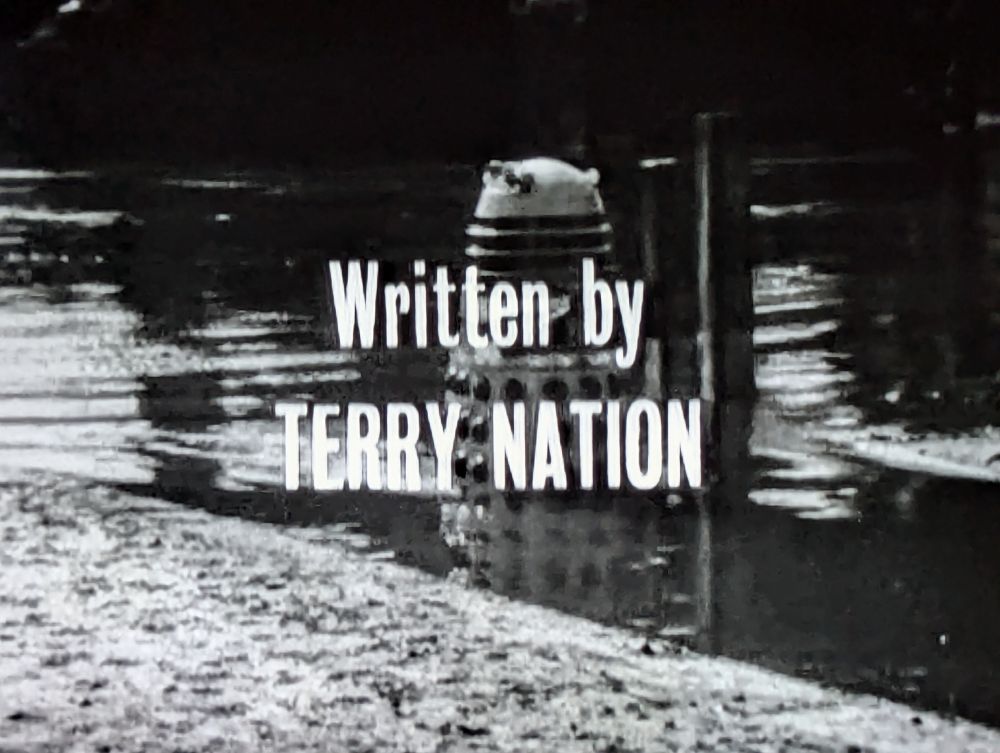
In the beginning, it was:

Grainy black & white photo of a Dalek with the words "written by Terry Nation" superimposed

Spoilers for TV canon through the most recent seasonRead more... )
labingi: (Default)
My non-fiction book Being Cut on relationship cutoff (severing contact) officially launches in ebook format today!

Cover of Being Cut by Arwen Spicer, white and red letters on black.

Blurb:

Chances are you have cut someone out of your life or someone has cut you out. Cutoff—severing all contact—is a common way to manage troubled relationships, yet it remains virtually unstudied and semi-taboo to discuss. We have the right to cut people off. Nonetheless, being cut off is often traumatic in ways our culture fails to recognize. Being Cut is a first-of-its-kind exploration of our society’s attitudes toward cutoff and a call for a cultural transformation that respects cutoff while being mindful of the harm it can do.

So if you haven't already heard me maunder enough about cutoff, you can now read more now!

In all seriousness, I owe many thanks to all the folks on DW who responded to my posts on cutoff over the years. From those who offered sympathy when I was in the throes of grief over being cut off by a dear friend to those who shared their views extensively and are quoted (under aliases) in this book, you have been a large part of this journey. Thank you.
labingi: (Default)
More good news, mostly medical and environmental, from the aptly named Good News:

labingi: (Default)
This is my promised further thoughts on Armand in S2 of IWTV.

NB: he is my favorite VC character, so I have strong feelings about his portrayal. Also Spoilers for Armand-related stuff in a lot of the VC books and S1-2 of the AMC series. Warnings: it’s a dark vampire story, plus this may read like sour grapes from a book fan.

I think our current popular culture suffers from a lack of curiosity. I have my personal and generational biases. It may be this has always been true but I notice it more now because, in my youth, they had a different list ideas worth exploring. At any rate, I notice it now.

At some point, socially left-leaning pop culture (which is the majority of it and what I consume) seemed to freeze its attention on a handful of issues, all of which are important and deserve more exploration. But the list is rather small. It includes the three pillars of equity discourse: race, LGBTQ+ issues, and (dis)ability, as well as gender/women’s power. It also includes abuse, power imbalance in relationships, and mental health/illness. It doesn’t seem to include much else.

The thing about Interview with the Vampire as a book is that its main themes aren’t on this list.Read more... )
labingi: (Default)
Season 1 of AMC’s Interview with the Vampire broke my heart. To avoid further heartbreak, I avoided commentary on the series, and I apparently did this so assiduously that I convinced the algorithm I didn’t care about it, because I had no idea season 2 had aired until months after it was finished. But I have now watched it and will share a handful of reflections.

Personal Impressions
I liked S2 a lot more than S1 for a few reasons. 1) S1 taught me that this isn’t really an adaptation of the book, so I knew what to expect. 2) It was comparatively closer to the book than S1, which made it go down easier. 3) I think it was better written; it didn’t hit the tin notes some of S1 did for me. As I said of S1, if I were going into this series with no book knowledge, I’d probably be a huge fan. It’s very good in many ways.

Spoiler-Free Review
This season covers roughly the second half of the titular novel and follows the plots points fairly closely with lots of changes in character and motivation.

The Good
* Stellar acting across the board. The recast of Claudia works pretty seamlessly (for me).

* Great production values/ambience.

* Unreliable narrators. Arguably mostly an accident in the VC books (Rice’s concepts changing over time), this series runs with issues of POV and memory to very good effect.

* Not being afraid of complexity: at times the characters, interactions, plot mechanics, and questions of what’s real run deep and nuanced without ever being confusing.

* Good reimagining of secondary characters. Daniel, Santiago, and Madeleine have little in common with their book counterparts, but the characters given their names are good original characters, more deeply drawn than their namesakes.

The Bad
Honestly, not much, but the series’ decision to ditch most of the novel’s themes requires centering secondary themes, which—in my opinion—leads to less interesting storytelling, both because motivations don’t track as well and because the substituted themes are more common in today’s popular media and, therefore, proportionally less creative and engaging: ex. focusing on dysfunctional relationships (definitely there in the book) to the exclusion of religion, parenthood, ontological questions of morality.

The Verdict
It’s good. Vampire fans should see it; most Rice fans will probably like it too. I’m a bit sad, though, that it will probably supplant the books for many and, thus, drown out a lot of the books’ most creative and original qualities.

Spoilery ThoughtsRead more... )
labingi: (Default)
I've started a new DW community, [community profile] ownhands, chiefly for discussion of the fiction search tool, Own Hands Story Search, which I'm developing. It's also open for discussion of reading, writing, genre fiction, publishing, etc.

I expect it will be low traffic. At a minimum, I'll post my newsletters, which won't be more than monthly.

So if you're interested in targeted search for fiction titles (especially SF&F), supporting small presses and indie writers, digital commons, etc., pop on over and join. :-)
labingi: (Default)
I admit it: I was intrigued by the thought of a book by Keanu Reeves and China Miéville, so I bought The Book of Elsewhere hot off the press, and I liked it quite a bit. Here’s a little guide to it.

Brief description: John Wick if he were 80,000 years old. (Not a spoiler; this is all over the advertising.)

tl;dr: I recommend this book to people who like SF&F that thoughtfully explores the experience of a preternaturally old protagonist (and who don’t hate John Wick).

Spoiler Free Review

This book follows the adventures of an 80,000-year-old protagonist with super fighting powers, trying to figure out how to become mortal. Nominally set in the present day, about half of it is flashbacks to various points in our hero’s timeline, which do a nice job of fleshing out his experiences and how he has affected the lives of others.

The book’s great strength is its protagonist, who is genuinely interesting and thoughtfully developed. Its great weakness is plot structure, of which is has little, and what it has is not very compelling. These two things are related. This book reminds me of nothing so much as God Emperor of Dune in following a very powerful, very old protagonist who, due to his power and age, just doesn’t have much at stake emotionally. This makes sense. In both cases, the protagonist has enough experience and wisdom to take things in stride and not be deeply fazed by just about anything from life to death to torture to betrayal, etc. The price of this plausible and thought-provoking characterization is low plot conflict and relatively little story momentum. The lack of momentum leads to a fairly week ending, though I think part of its weakness is also due to somewhat shallow exploration (and setup) of themes.

I think both these books could have pulled it off better, but not by all that much. This difficulty is partly baked into the concept. Actually, in both cases, my personal revision recommendation would have been to increase the prominence of the female presence—I’ll be vague to stay spoiler free.

The book gets extra points from me for the character of the pig, which is an excellent example of a non-human animal character who is not (much?) anthropomorphized but—as an animal—is an important character (like, for example, Moby Dick). Well done.

Spoilery Review )

Two Sociopolitical Critiques )
labingi: (Default)
(Note: written a couple months ago, but not posted till now.) I got myself embroiled in an online chat-based dispute about how to address certain racist stereotypes that were voiced in a community I’m part of. This has sparked a lot of self-reflection on how I approached it, and I wanted to share some of that here.

I’m going to skip specifics, but in short, a racist stereotype voiced by a person from the Global North was called out by a person from the Global South, who also asked for a larger organization-level response. That response—at least the first stage of it—came in the form of an email denouncing racist remarks with clear (though not explicit) reference to this incident.

I voiced the thought that singling out that one person in the email was not the best approach. This ignited further discourse, which I would sum up as critiquing me for centering the feelings of a person from the Global North over the needs, feelings, etc. of the people suffering harm in the Global South. In the course of this critique, I was asked why I was centering the feelings of the privileged, and over the past day or so, I’ve thought about that a lot.

There is not just one answer.

Part of the answer is that, as a person from the Global North, I am more empathetic to that positionality because it is closer to my own experiences, and so I default to showing more empathy for that positionality. That is not a good reason, and—with no good excuse—I did seriously misread the social situation of that chat, in that I did not properly take into account the compounded harm to my comrades from the Global South. From that perspective, anything that further decentered their already marginalized voices intensified the harm to them, and I should have seen that and responded differently.Read more... )
labingi: (Default)
Jessie Gender has posted a video on Biden's response to the assassination attempt. I find it moving and, honestly, somewhat disturbing. I could have commented on it on YouTube, but I found I didn't want to. I even considered just messaging her personally but decided she has enough on her plate. So I'm just going to give my thoughts here.


I really appreciate her willingness to share the sincere hurt and vulnerability she shows here. She's completely right about the hypocrisy, and at the same time, I personally thought Biden’s condemnation of the assassination attempt was appropriate.

Here’s my reasoning: our goal, I think, is to see less violence. If Biden had not condemned the assassination attempt, millions would have read that as endorsing more violence. That would stoke backlash. It would not make trans people safer; it would make them less safe. I think the problem is not what Biden said condemning the assassination; it’s all the things he (and the establishment overall) don’t say/do.

Biden’s statement was clinging to old norms, i.e. “We don’t shoot our political opponents in the US.” That’s not enough, but I would rather live in a country that has that norm than one that doesn’t.

I am curious, though, what Jessie would have advised Biden to say instead.
labingi: (Default)
The Forgetters is a story collection by Greg Sarris, chairman of the Federated Indians of the Graton Rancheria (Southern Pomo and Coast Miwok). This collection is a companion to his earlier story cycle How a Mountain Was Made: Stories. Both are centered on Sonoma Mountain, California. Both are framed by the crow sisters, Question Woman and Answer Woman sharing stories. I highly recommend both as works attempting to share Indigenous knowledge with both Indigenous and non-Indigenous people who have "forgotten the stories."

How a Mountain Was Made shares a set of stories inspired by traditional stories from the time when animals were people. The Forgetters foregrounds recent historical memory, with most stories set between the 1860s and 1960s. While How a Mountain Was Made exists in a sort of mystical reality (for want of a better expression), The Forgetters delves into the details of its historical setting, often invoking the dispossession, impoverishment (literally and culturally), and exploitation of Indigenous people reduced to working as day laborers or servants for the white settlers who have stolen and mangled their ancestral lands.

The story structure, however, echoes the earlier book, providing morally didactic stories on the overarching theme of people "forgetting" the lessons of how to live well with each other and the land. Individual stories take up themes such as greed, envy, ostracism, and subtler forgettings like lost humility and failure to comprehend another's needs (even in a very good, moderate people). Though centered on Indigenous experience, the text explicitly encompasses non-Indigenous people too, and they occasionally appear as protagonists.

The final story ventures into Indigenous futurism, depicting how stories continue on a Sonoma Mountain ravaged by climate catastrophe.

For me personally, the story that moved me most was (semi-coincidentally?) the one that centers a protagonist I take to be white (due to the absence to racially marked experience). The story concerns being a parent of an older adopted child, and for me as such a parent, it rang very true and brought (good) tears to my eyes.

Profile

labingi: (Default)
labingi

April 2026

S M T W T F S
    123 4
567891011
12131415161718
19202122232425
2627282930  

Syndicate

RSS Atom

Most Popular Tags

Style Credit

Expand Cut Tags

No cut tags
Page generated Apr. 10th, 2026 07:30 pm
Powered by Dreamwidth Studios